
The British Monarchy – Powers, Duties, and Public Role
The British monarchy is one of the oldest institutions. But people today often mistakenly think about what the monarchy does. The monarch remains a visible figurehead, but power is practically symbolic and limited by constitutional rules. Understanding this mandate is crucial if we are to appreciate the functioning of modern British democracy, and why the monarchy really matters.
Constitutional Monarchy – Power Bound by Law
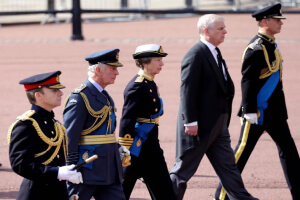
The United Kingdom is a constitutional monarchy, meaning there is a sovereign who reigns but does not rule. All political power resides in elected bodies such as Parliament and the Prime Minister, while the monarch performs ceremonial and representative functions. The form of government evolved over centuries of legal changes, including the Magna Carta (1215), the Bill of Rights (1689), and many expansions into democracy.
The theory behind constitutional monarchy is that the Crown’s powers are carried out “on the advice of ministers.” This means, theoretically, that government officials exercise authority legally in the name of the monarch, who almost never intervenes personally. Their role is one of precedent, protocol, and custom—discretion is not theirs.
Head of State – Symbolic, Not Executive
As head of state, the monarch is regarded as a symbol of national unity and continuity. At the beginning of Parliament, the monarch performs various functions such as granting royal assent to laws and representing the UK at state functions and diplomatic events. All these acts are important in terms of their appearance, but they mean little in substance.
To open Parliament, the monarch reads the “King’s Speech,” outlining the government’s legislative program. This speech, however, is written entirely by the government. By being present, the monarch lends importance and tradition to the occasion but has no say in policies. Granting royal assent to laws equally stands as nothing more than a rubber stamp. There has not been a case of withheld royal assent since Queen Anne in 1708.
The Royal Prerogative – Power in Name Only
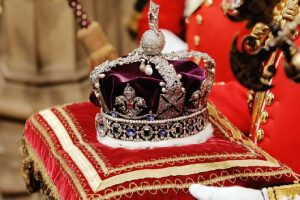
The Crown still technically holds prerogative powers, such as declaring war, signing treaties, appointing ministers, and dissolving Parliament. But since all these powers are now exercised by the government, it is actually the Prime Minister who decides when to use them. The monarch is to give only a formal approval. The appointment of a new Prime Minister is one accepted exception in which the monarch is formally more active.
They formally invite the leader of the majority party to form a government following a general election. If no party wins outright, they may consult the various party leaders to determine who can command a majority. This process is governed by strict convention, and the monarch should remain politically neutral, proceeding only where the choice is clearly determined by democracy.
Political Neutrality and Public Restraint
A constitutional cornerstone has been the monarch’s doctrine of avoiding party politics. They are not allowed to vote, endorse a party, or openly express political opinions. Respect for this neutrality is essential to retain legitimacy before a divided electorate.
Sometimes this clashes with personal beliefs. When he was heir apparent, Prince Charles, now King Charles III, faced criticism for expressing views on the arts and the environment. As monarch, he is expected to exercise greater restraint and only make public statements reflecting national consensus. During crises, neutrality is vital. For example, during Brexit, Queen Elizabeth II remained silent despite political uncertainty. Her silence was not indifference—it was constitutional discipline.
Head of the Nation – Tradition, Service, and Continuity
The monarchy performs a broader social and symbolic function beyond the constitutional. It anchors the nation during upheaval by providing continuity. In moments of grief, joy, or shock—such as during the COVID pandemic or the death of Princess Diana—the monarchy provided stability and unity.
Royal ceremonies, such as weddings, funerals, jubilees, and coronations, act as rituals of collective identity and tradition, even for those who do not generally view themselves as monarchists. They fill a symbolic gap in modern society. The monarch also undertakes public service activities through charity patronage, military associations, and civil institutions. These engagements are apolitical and reinforce national service, especially amid frequent changes in elected leaders.
The Monarch and the Church of England
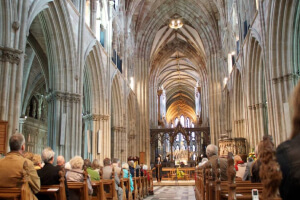
The sovereign is the Supreme Governor of the Church of England. This is largely ceremonial but binds the monarchy to the Anglican tradition. The monarch formally appoints archbishops and bishops (on ministerial advice) and swears to uphold the Church’s doctrine at coronation. This remains a legacy of historical settlement in a religiously diverse UK rather than an assertion of religious dominance.
International Role – Commonwealth and Beyond
The monarch of the UK is also head of several Commonwealth realms, including Canada, Australia, and New Zealand. In each, the monarch’s role is symbolic and non-political, with day-to-day governance managed locally by a Governor-General representing the monarch.
On a broader level, across over 50 Commonwealth countries, the monarch is the honorary Head of the Commonwealth. This role is diplomatic and unifying, serving as a shared reference point for diverse nations with colonial histories. The Commonwealth remains voluntary, and member states are not bound to prioritize the monarchy.
Public Opinion and Democratic Legitimacy
Public support for the monarchy has remained steady for decades but is not universal. Critics see the institution as outdated or undemocratic. Debates about cost, privilege, and accountability arise during transitions or controversies.
Ultimately, the monarchy’s legitimacy rests on popular consent. If a large majority of citizens favored a republic, Parliament could act accordingly. There is no constitutional block to change—only political and cultural obstacles. For now, most Britons value the monarchy as a stable, unifying institution.
Legal Status – The Crown as a Legal Entity
The Crown is not just a person but a legal entity. Laws are passed in the name of the Crown, judges serve as officers of the Crown, and civil servants act in its name. The concept of the Crown ensures continuity of the state regardless of government changes.
The monarch is both an individual and a legal symbol. On the death of an incumbent monarch, the heir instantly becomes sovereign, ensuring uninterrupted governance with no interregnum.
Succession and Modernisation
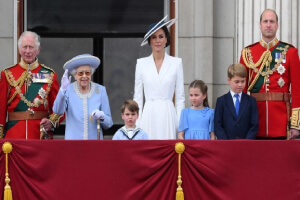
Succession is governed by law, originally under the Act of Settlement (1701). The Succession to the Crown Act (2013) modernized the system by ensuring gender equality in succession and removing disqualification for marrying a Roman Catholic.
Recent monarchs have also introduced reforms, such as cutting the Royal Household budget, streamlining operations, and increasing engagement with the public via digital platforms. These efforts aim to keep the monarchy relevant in a rapidly changing society.
Summary
Though stripped of many of its powers, the monarchy remains crucial to the UK constitution. The monarch is the Head of State, upholding democratic norms and symbolizing national unity and service. Influence is exercised through presence rather than power, through symbolism rather than statutory authority. While debate continues about the monarchy’s future, it remains a defining element of Britain’s political and cultural identity.