
Political Evolution of The UK Labour Party – From Its Roots to Modern Challenges
One of the most forceful political organisations in Britain has been the UK Labour Party. Established in the early part of the twentieth century, it has been a major force shaping health, education, and social welfare policies; it still remains a significant force on the political landscape. The paper goes over the history and ideological changes of the Party while exploring how it originated, changed over time, and shaped British society.
The Birth of the Labour Party
The early formation of the Labour Party came to be an important chapter in the history of British political movements. Labour arose to counter the under-representation of working classes in Parliament and to pay attention to their rights and concerns.
Early 20th-Century Foundations
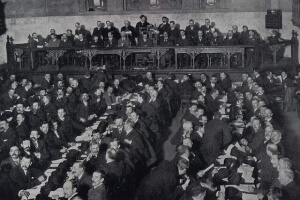
In 1900, the Labour Party was officially founded as the Labour Representation Committee, which was essentially a league of trade unions and socialist groups set out to seek political representation for the working class. This marked a sharp break with an extension of the political culture whose traditions mainly aided the aristocracy and wealthy landowners. Before Labour, workers were poorly represented in Parliament, and the main parties of the day, i.e., Liberals and Conservatives, paid almost no heed to such matters as worker rights, housing, and social welfare.
Labour’s founders saw this newer and ever-growing segment of society as the largely disenfranchised constituency, and as such, they promised to rally around it; thus, this political change in the state of British politics proved to have been a setup for more heated discourse revolving around social justice and questions regarding state intervention in the economy. Its actual opportunity arrived in 1906 when the party successfully broke into Parliament by winning seats in the general election and henceforth was considered a body to reckon with in British politics.
Ramsay MacDonald’s Leadership
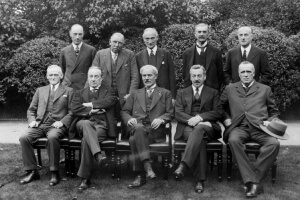
Led by its first great leader Ramsay MacDonald, the Labour Party faced challenges and achieved some successes in those early years. MacDonald was the first ordinary leader to form the future pattern of Labour in government, although it was not to be at once easy.
Ramsay MacDonald was made Prime Minister by the Labour Party in 1924 for the first time, but it was a minority Government and depended upon the Liberals for support, and for a short duration. However, this short period became a watershed when Labour was accepted as the real alternative to the traditional powerhouses of British politics. Having a minority Labour Government in office over less than a year was witnessed by the many scandals, civil strife, and depression in the world. MacDonald never really clung on to power nor was in a strong position in the late 1920s. With such difficulties, the Government was forced to surrender.
This, however, was a starting-point from which Labour was to gather so much strength for success much later. The actual power came after the election of 1945, which was to be remembered as the most powerful era in the history of Labour, with Clement Attlee as the Prime Minister.
Labour and its Transformation – The Attlee Government of 1945
The Labour Government of 1945 under Clement Attlee was the transformative period for the Labour Party; it was also the most dominant period as regards power and policy. It introduced the major social reforms, which transformed British society.
The Birth of the Welfare State
It also witnessed the creation of the greatest welfare mechanism in British history. Above all, it set up the National Health Service, a system that promised medical help for free to every citizen irrespective of income or social class-a radical shift in social policy and the great Labour principle that everyone is entitled to basic services.
Some industries were nationalized by the Attlee government so that after so many years of gradual de-nationalization and privatization under Conservative governments, the key industries like coal, steel, and transport could never be stolen yet again and exploited by selfish capitalist interests. With the nationalization of industries and the creation of social services to aid those in need, Britain was becoming a capitalistic, mixed economy with active state participation in economic management, alongside private enterprise.
The reforms reflected Labour’s socialist creed, which saw the party as the defender of working-class interests by providing a social security net that would protect future generations. Even though Attlee cemented Labour’s place in the British political scene, it also kick-started a host of ideological debates surrounding the extent of government interference in the economy.
The Rise of a Mixed Economy
Late 1940s and ’50s saw Labour beginning to readjust some policies to match new global configurations. Switch toward mixed economy showed they were pragmatists in balancing state control and market-led growth.
Post-war years exposed that the socially-oriented Labour government wanted to establish a more balancing society through social programs and nationalization. However, that idea did not come without problems. On their part, the economic global environment was transforming, and the rise of the consumer economy in the U.S. and other Western nations demanded a re-look on the economic policy from the perspective of Labour. With the British Empire on the wane, so too was Labour’s grand vision of a socialist crescent relevant.
By the 1950s, the Labour Party had loosened some of its strong opposition toward society operating a mixed economy. Whilst key services and industries were still being run by the governments, private sector growth and policies encouraged by the market were increasingly looked upon favorably. The final pragmatic shift would become the hallmark of the party as it tried to reconcile its socialist past with the realities of world capitalism post-WWII.
Shifting Ideologies – The 1970s and 1980s
The 1970s and 1980s saw increasing splits developing within the Labour Party. Ideological fissures deepened corrupting any harmonious future direction for the party.

Internal Divisions and the Rise of the Left
It was by the 1970s when the Labour Party truly began to fan the flames of internal ideological debates as to how far socialism should be pushed in an ever-changing world. A more radical left wing of the party was ushered in, advocating for more nationalization and greater taxation on the rich.
The 1970s were tumultuous for the Labour Party with internal ideological conflicts. With the growing economic spells of instability and crisis-1973 oil crisis-was probably the turning point, the nation was divided increasingly so within itself. A radical socialist faction of elements-with the likes of Tony Benn in the forefront-pushed Labour to adopt more traditional, left-wing policies. They wanted to implement further nationalization, higher taxes for the rich, and a more direct hand for the state in managing the economy.
On the contrary, a cohort in the middle, including Harold Wilson, tried to look for a pragmatism that would balance socialist ideals of Labour. The division finally sent its bark against Michael Foot, who in the early 1980s presided over an almost bankrupt party struggling with issues of relevance in a booming political landscape and especially with her rise to power by Margaret Thatcher in 1979. Since then, Labour’s left-wing agenda was handed a severe blow, resulting in electoral defeats and internal dissensions.

The New Labour Shift
By the mid-1990s, Tony Blair’s leadership was perceived to lean to the right of center. The strategic intent of this move was to capture a wider populace.
One of the conditions that became of the new Labour Party during the mid-1990s was a radical transformation under the leadership of Tony Blair. In trying to win a larger electorate under changing economic conditions, Blair embraced the concept of New Labour to project the modernization of party image and policies. This shift in ideology moved Labour away from its traditional socialist origin and into the central ground of politics, where it sought to balance market-friendly policies with principles of social justice.
Before Blair found his way to the top leadership, radical proposals like the nationalization of industries were standard in the Labour Party agenda. It deliberately positioned itself as an alternative to the extremes of Thatcherism on one side and conventional socialism on the other.
Labour in the 21st Century
Since the dawn of the new millennium, major challenges have arisen for the Labour Party, requiring it to adapt. With globalization throwing the economy into disarray, shifting voter expectations, and internal divisions, Labour has had to re-assess its position. Under late-1990s-centrist leadership of Tony Blair, elections were won, but criticisms mounted over “New Labour” abandoning its values. The election of Jeremy Corbyn marked the other way around: back to socialist values, but laboriously so. Starmer tries to rebuild under such difficult circumstances: uniting, economic recovery, and addressing challenges post-Brexit.
Summary
The UK Labour Party has evolved significantly since its founding in 1900, from a working-class movement to a major political force in Britain. Its history includes key moments like the creation of the welfare state under Clement Attlee, internal ideological divides in the 1970s, and the shift to “New Labour” under Tony Blair in the 1990s. The party faced challenges in the 21st century, notably under Jeremy Corbyn’s leadership, which returned to more socialist policies but led to division and electoral defeat. Today, Keir Starmer leads Labour in an attempt to unite the party and address modern challenges like Brexit and economic recovery.